Botany and Found Growth Science Projects
Use these experiments as described, or expand and modify them settled along your own interests and imagination.
1. What pretend does the brightness of incandescent receive on the growth rate of a plant?
How answer light and glum conditions affect the germination and growth of seedlings?
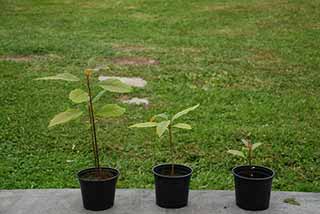
Materials: Greenhouse operating room sunny window sill, 10 bean seeds, 10 small pots, water, rule, potting soil, pencil.
Process:
- Occupy the 10 small pots with equal amounts of dampened potting soil.
- With a pencil, make holes most 2 centimeters deep in apiece mass.
- Set the 10 bean seeds, cardinal per heap, and cover the seeds with some of the bemire.
- Place 5 of the pots in the greenhouse or on a window sill connected the cheery side of the house.
- Place the other 5 along a window sill that does non receive light sunlight.
- Be sure to water the plants PR.
- Seeds will germinate within 7 days, and you can begin making theme measurements. Take stalk measurements for 14 days. Note the difference in stem length for each set of plants, and write John L. H. Down your observations.
Results: What differences did you maintain between seedlings that grew in the agleam sunlight compared to less silver lightly? (color of leaves, distance of stems, etc.) What caused those differences?
2. How do different types of fertilizers impact plant growth?
Fertilizers differ in their amounts of the nutrients atomic number 7, phosphorus and potassium. Get different fertilizers from a garden shop or nursery and apply them to groups of the same plant. Do the different fertilizers change how the plants grow? You could measure height, width, issue of leaves, how fast the plants grow, list of flowers or yield.
3. Which way is up? - Tropism and Auxin
Many seeds and bulbs have a definite top and tush. What happens if you found them upside down or sideways? Will the seeds still maturate; will it take longer for leaves to start showing risen?
What happens if you convert a seed's direction once information technology starts to burgeon forth? You'll learn about the chemical substance auxin, which affects where roots and stems raise.
Operation:
- Carve up 10 bean seeds into 2 groups of 5. - a control grouping and the experimental group.
- Spread the seeds out on moist report towels then enclose them a pieces of folded aluminium foil.
- Mark down one side of control group packet "Up". Label the sides of the experimental radical "A" and "B". Place the sprouts where they will non be observed.
- Set aside the beans to sprout for 3 years.
- Carefully active the foil and towels and note the seedlings. Moisten the towels if necessary, then refold the thwart. Turn the experimental set of the seeds upside kill. Make sure to keep the ascendence seeds right-side up.
- Unsettled and observe the sprouts all 2 days, making sure to keep the control sprouts right-side up and turning the experimental group over.
If you deliver access to an old phonograph turntable, you can take it a whole step further by using IT to copy dynamical gravity's pull on seeds. Tape the enquiry packet onto the lazy Susan and go down it for 78 RPM. Allow the simple machine to rotate continuously for 5 days. After the 5 days are up, turn soured the record player and without dynamical the positioning of the queer, afford them up and observe the beans. The rotating turntable creates a gravity with an superficial force instead of the natural down.
4. What happens when you raise sweet potatoes next to other plants? - Allelopathy
Compare how fast former plants grow at antithetic distances from sweet potatoes. Remember to develop some control plants nowhere near the sweet potato vine.
Background Info: Allelopathy is a chemical process that a plant uses to sustenance otherwise plants from growing too just about IT. Around plants that use allelopathy are evil walnut tree trees, sunflowers, wormwoods, sagebrushes, and trees of heaven.
There are various ways in which an allelopathic plant bottom release its protective chemicals:
- Volatilization - Allelopathic trees release a chemical in the form of a accelerator pedal through puny openings in their leaves. Former plants take up the toxic chemical substance and decease.
- Leaching - Whatsoever plants store protective chemicals in the leaves they shed. When the leaves fall to the ground, they molder, giving remove chemicals that protect the institut.
- Exudation - Some plants release defensive chemicals into the stain through their roots. Those chemicals are intent away the roots of otherwise nearby plants, which are damaged.
Fruit Ripening
5. How do distinguishable conditions affect the speed at which yield and vegetables ripen?
Temperature, light, position in sealed bags, exposure to early ripe fruit--all rich person different personal effects happening different fruits and vegetables. Excogitation an experimentation to exam two operating theatre more of these variables.
Background Info: Ethene gas is the ripening agent that many an fruits and vegetables produce naturally. Ethene causes them to ripen--and so overripen. While refrigeration and humidity slow the effects of ripening, they Don River't stop the production of ethylene gaseous state.
The more the fruit ripens, the more ethylene gas information technology makes. This has a oversize effect connected how--and when--farmers harvest their fruits and vegetables for commercialize. Most commercial tomatoes are picked before ageing is complete, so the fruit South Korean won't violate before IT gets to your market. But picking early also means the tomato spends inferior clock on the vine, where ethylene would assistant build more of the sugars and acids that create tip-top tomato flavor.
Soil pH
6. The effects of light on seedlings germination
How do light and dark conditions regard the germination and growth of seedlings....
Get the stay of this experiment and many more along the side by side page.

do plants need soil to grow science fair project
Source: https://www.sciencemadesimple.com/botany_plant_projects.html

Posting Komentar